


.png)
_edited.png)
Building a Seat at the Table: How the Civic Impact Academy Is Redefining Civic Leadership in Charlotte
- Zhateyah YisraEl

- Jun 16
- 4 min read
As Charlotte continues to grow at a historic pace, decisions about housing, transportation, economic mobility, and neighborhood development are shaping the future of the region. Yet for many residents, especially those most impacted by these decisions, participation in the process often feels out of reach.

For Christine Edwards Pitkin, founder of Civility Localized, that disconnect became impossible to ignore.
After nearly a decade consulting with local governments across the Southeast, Edwards Pitkin noticed a troubling pattern. The people most affected by public policy were often absent from the rooms where those decisions were being made. Meanwhile, public servants who genuinely wanted to engage communities more effectively frequently lacked the tools, frameworks, and relationships necessary to do so.
Rather than accepting the status quo, she built an alternative.
The Civic Impact Academy, a 12-week leadership and advocacy program, was created to bring community leaders and government professionals together in the same learning environment. The goal is simple yet transformative: create a city where residents and institutions collaborate rather than operate in separate spheres.
"The residents most affected by public decisions were almost never in the rooms where those decisions were made," Edwards Pitkin explains. "I kept watching brilliant residents—most of them Black and Brown women—show up with lived expertise that exceeded anything in the room, only to be talked over by people with credentials and no proximity."
That realization became the foundation for the Academy.
Launched in 2024, the program combines mentorship, advocacy training, civic education, and network-building opportunities designed to help participants become more effective change makers. Unlike traditional civic leadership programs that focus exclusively on either residents or government employees, the Civic Impact Academy intentionally places both groups in the same cohort.
Each class consists of approximately 20 participants—half community leaders and half public-sector professionals—who spend 12 weeks learning together, solving problems together, and building relationships that extend long after graduation.

The approach appears to be working.
Since its launch, the Academy has graduated two cohorts and established a growing alumni network of civic leaders committed to creating sustainable change throughout Charlotte-Mecklenburg. Graduates have gone on to serve on local boards and commissions, advocate for policy reforms, and launch community-driven initiatives addressing issues ranging from affordable housing to neighborhood engagement.
One notable example is alumna April Clark, whose Community Design Challenge project, "A Roof Over Every Head," became the foundation for her ongoing service with an affordable housing nonprofit focused on supporting single Black mothers.
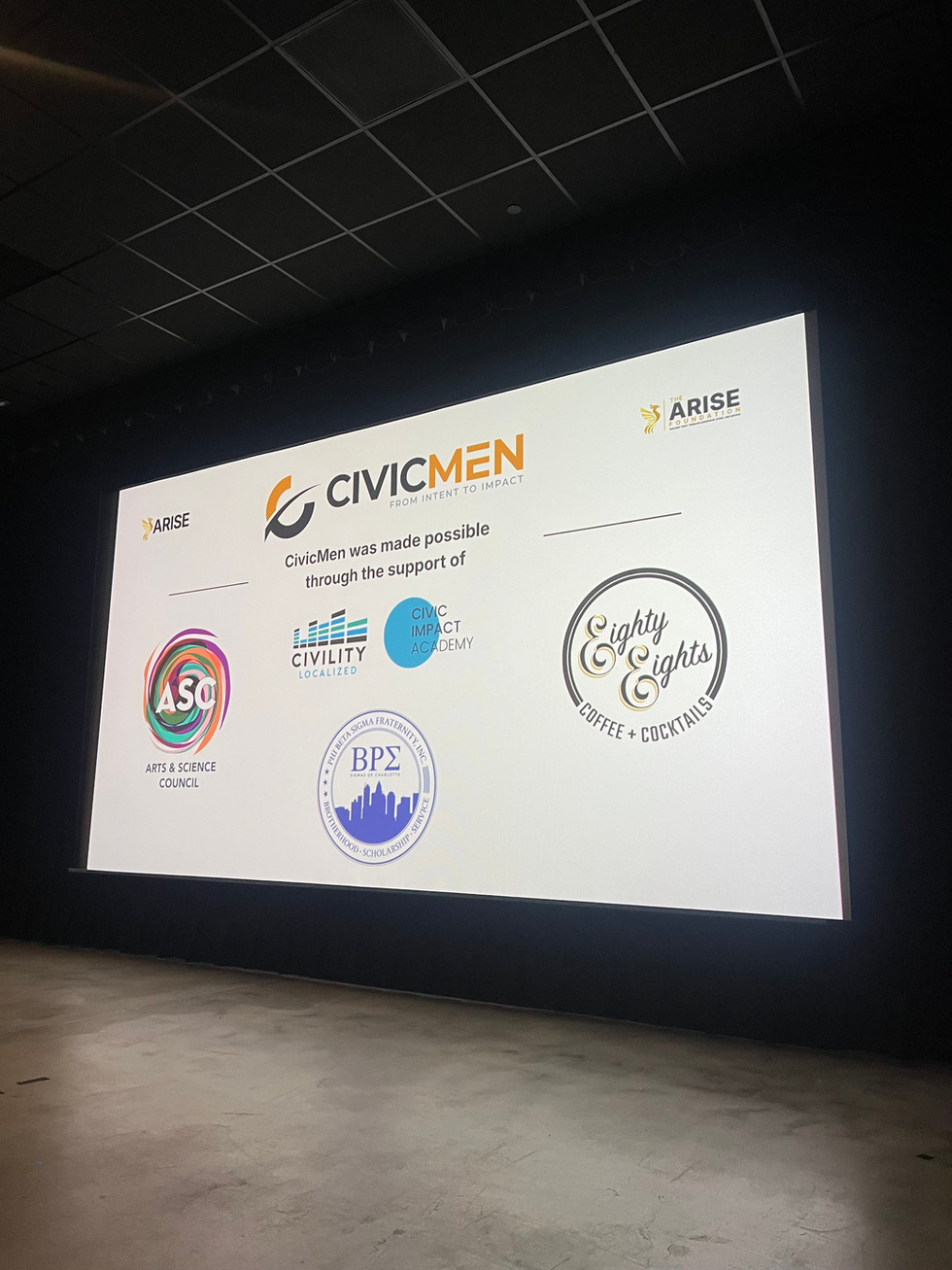
Another example is community advocate and film producer Sean Eldridge. During Cohort 2, Eldridge developed CivicMen as his Community Design Challenge project. Since completing the program, he has produced and premiered the documentary in Charlotte, creating space for conversations around manhood, civic engagement, healing, leadership, accountability, and community connection. The project demonstrates how ideas developed within the Academy can evolve into community-centered initiatives that continue to educate, inspire, and bring residents together beyond the classroom.


For Edwards Pitkin, these outcomes represent more than individual success stories. They demonstrate what becomes possible when communities are equipped with the knowledge, relationships, and confidence to participate in civic life.
The Academy's mission became even more urgent following the conclusion of Charlotte's Civic Leadership Academy, a city-supported civic engagement program that graduated approximately 500 residents across 14 cohorts between 2019 and 2025. Its closure left a significant gap in civic education and leadership development opportunities for residents seeking to better understand and influence local decision-making.
Rather than allowing that opportunity to disappear, the Civic Impact Academy stepped in.
The program was designed to remain accessible, offering tuition at a fraction of the cost of comparable leadership programs while maintaining limited scholarship opportunities for participants who may face financial barriers. The curriculum also expanded to address systems where racial inequity remains deeply embedded, ensuring participants gain practical tools for understanding and navigating the structures that shape their communities.
At its core, the Academy seeks to solve two interconnected problems.
For residents, it addresses the feeling of exclusion from decisions that directly affect their lives. Participants learn how local government functions, how public budgets are developed, how boards and commissions operate, and how advocacy can influence policy outcomes.
For government professionals, the program provides frameworks for more authentic community engagement and opportunities to build trust with the people they serve.
The result is a learning environment where civic literacy and empathy develop simultaneously.
Participants leave with more than a certificate. They leave with a Community Design Challenge action plan, practical advocacy skills, professional relationships, and a clearer understanding of how to turn ideas into action.
Most importantly, they leave knowing they belong in the room.
"I hope women, especially Black and Brown women who have spent years being told to wait their turn, learn that their lived expertise is already a credential," says Edwards Pitkin.
That message resonates beyond the classroom.
As Charlotte continues to evolve, the Civic Impact Academy offers a powerful reminder that the future of a city should not be shaped solely by elected officials, planners, or institutions. It should also be informed by the voices, experiences, and expertise of the people who call it home.
For those ready to move from observation to participation, the Academy provides both the roadmap and the community to make it possible.
The Bottom Line
The Civic Impact Academy is more than a leadership program. It is a civic infrastructure initiative designed to ensure that residents and public leaders learn, collaborate, and problem-solve together. In a city experiencing rapid change, that kind of relationship-building may be one of Charlotte's most valuable investments.
Applications for Cohort 3 open July 1 and remain available through July 31.
Limited scholarship opportunities are available for qualifying participants.
Learn more and apply: https://www.civicimpactacademy.com/apply
Follow on Social Media


.png)

Yes to civic education, yes to Black-woman-owned businesses, yes to this feature!