


.png)
_edited.png)
Mabel Williams and the Fight for Black Survival in America’s Medical System
- trewayrich
- Mar 31
- 3 min read

How a forgotten Black liberation leader exposed medical racism decades ago — and why her lessons still matter today.
If we don’t learn from our past, we’re bound to be lost in the present — which is why so many people are building their future blind.
The Civil Rights Movement and the broader Black Liberation Movement produced countless extraordinary leaders. While history often centers figures like Martin Luther King Jr., Malcolm X, and Fred Hampton, many equally powerful organizers remain overlooked. These were the heavy hitters — people whose impact reshaped life in America long after they left the world.
One of those leaders was Mabel Williams.
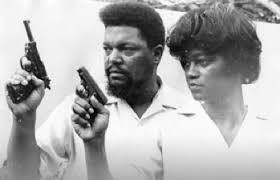
The Woman History Feared
In an era when Black Americans were expected to endure violence quietly, Williams stood at the forefront of organized resistance. She became a pioneer of the violent self-defense movement within the Black Liberation struggle, believing survival required more than moral appeals — it required protection.
Williams played a pivotal role in the Monroe, North Carolina chapter of the NRA, a chapter that was quietly all Black. While it appeared ordinary on the surface, it actually served as a front for a community rifle club founded by her husband, Robert F. Williams.
The club trained men and women, young and old, in firearm safety and community defense. It wasn’t unusual to see grandmothers arriving with shotguns, prepared to protect their neighborhoods.
This wasn’t symbolic.
It worked.
The strategy was so effective that the Ku Klux Klan was eventually banned by the city council from staging motorcade-style terror attacks through Monroe’s Black communities. This decision followed a botched lynching attempt against NAACP Vice President Dr. Albert E. Perry, when a Klan motorcade arrived at his residence looking for blood.
But instead of finding victims, they met organized resistance. When the attackers opened fire, it was their own blood that was spilled. A battalion of military-trained community members returned fire, throwing the terrorists into chaos. In the scramble, they crashed into one another, dragging wounded bodies to safety before retreating in defeat.
A War Inside the Hospital Walls
Yet one of the most relevant parts of Williams’ legacy today isn’t only her role in armed community defense — it’s what she exposed inside America’s healthcare system.
The same year she eloped with Robert Williams, she began working at Ellen Fitzgerald Hospital. There, she served as a cook, a maid, and a nurse’s aide — roles that allowed her to witness the hospital’s operations from every level.
What she saw, she later described as “a genocide.”
Black patients were treated as disposable.
They were forced to wait in basements while white patients were seen first. Black newborns were placed in bassinets located in a utility room — the same room where bedpans were cleaned and needles sterilized. Racist remarks from doctors and nurses were routine.
The cruelty wasn’t accidental. It was systemic.
And although the outward appearance of hospitals has changed since 1947, the disparities have not disappeared.
The Data Confirms What Communities Have Always Known
Today, African Americans continue to experience higher mortality rates across nearly every major health category — particularly in maternal and infant care.
This persists despite evidence that Black infants are among the most resilient at birth. A NICU nurse once told me while caring for my daughter:
“Black girls are the most likely babies to survive premature birth, and Black boys are a close second.”
Yet those biological strengths are undermined by unequal care.
Modern research now shows something powerful: when Black patients are treated by Black physicians, mortality rates drop by about 27 percent.
Representation doesn’t just feel good.
It literally saves lives.
Williams also revealed that procedures requiring licensed nurses were often performed on Black patients by unlicensed individuals — a reflection of how little African American life was valued within the system.
The Lesson Mabel Williams Left Us
Mabel Williams passed away on March 24, 2022 — one year and one day before my youngest daughter was born safely at home surrounded by African American healthcare professionals. It’s no coincidence that all of Williams’ own children were born at home in the same manner.
She understood something many still struggle to accept:
Systems that were never built to protect us rarely will.
Which brings us to the present moment.
The solution is medical sovereignty.
The African American communities must begin thinking collectively about healthcare — not only as patients, but as providers. We must raise and support physicians, nurses, midwives, and medical professionals within our own communities.
Not just for careers.
For survival.
History shows that no one safeguards Black life more fiercely than Black people themselves.
Just as Mabel Williams organized her community to defend itself from racial terror, her legacy now calls us to defend ourselves inside institutions that continue to fail us.
Because the question remains the same across generations:
Who will take care of us — if not us?


.png)

Comments