


.png)
_edited.png)
Telling the City’s Story: Creatives, Community, and the Power of Narrative in Charlotte
- Zhateyah YisraEl

- Apr 7
- 3 min read
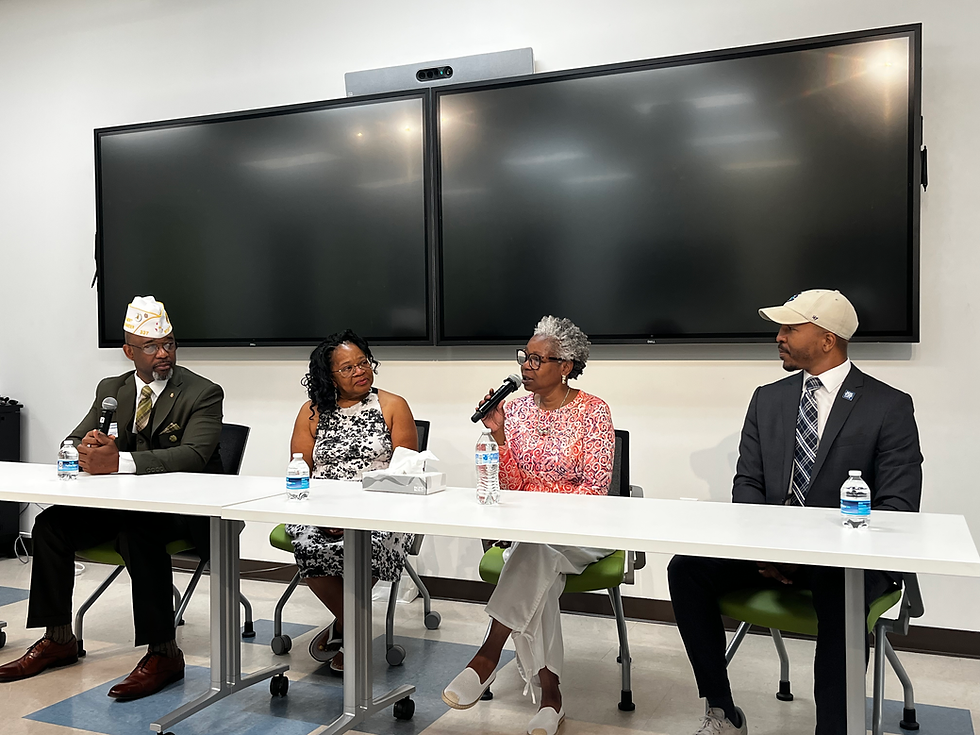
At the Sarah Stevenson Tuesday Forum, a panel of Charlotte-based creatives and storytellers gathered to explore a central question shaping the city’s cultural future: Who gets to tell the story—and how does that story shape the community?
Featuring publicist J Hill, photographer Cyda of Moon King Moments, and filmmaker Bobby Kerns, the discussion offered an intimate look into the intersection of media, identity, and economic growth in a rapidly evolving Charlotte.

From Local Roots to Citywide Impact
For J Hill, storytelling began long before boardrooms and brand strategy. Growing up near West Boulevard, his early exposure to hip-hop magazines and local media planted the seeds for what would become a career in public relations and brand development.
“I was always thinking about the end goal,” Hill shared, reflecting on the creation of his agency, BrandUScript. That forward-thinking mindset allowed him to transition from publishing magazines like Celebrity Power to managing high-level PR, crisis communications, and athlete branding.
Yet, despite national reach, Hill made a deliberate decision to reinvest in Charlotte.
“As the city grows, we can’t lose the Charlotte we grew up on,” he said. “Both versions can exist—but we have to build that bridge responsibly.”
Building Social Capital in a Growing City
That bridge takes form through initiatives like the Power Mixer, a networking event Hill launched after recognizing a deeper issue: Charlotte ranked low in social capital.
“Some people believe Charlotte is cliquish,” he explained. “But the city can’t take its next steps if we don’t work together.”
The Power Mixer brings together a cross-section of the city—creatives, executives, startups, and community leaders—challenging traditional silos and fostering meaningful connections.
Hill’s philosophy is rooted in abundance rather than exclusivity.
“I don’t believe in gatekeeping. When opportunities are shared, the whole city moves forward.”
The Art of Seeing—and Revealing—People
For Cyda, storytelling is less about words and more about vision.
As the creative force behind Moon King Moments, she approaches photography as both an emotional and intuitive process.
“It’s a feeling,” she said. “I can tell when someone is uncomfortable, when something isn’t aligned—and I adjust to bring their light out.”
Her work emphasizes intentionality—every pose, every frame crafted to reflect not just a person’s image, but their story.
“People don’t just want a picture. They want to see themselves.”
Capturing Legacy Through the Lens
For Bobby Kerns, storytelling is about preservation.
After first picking up a camera in high school, he transformed a $60 pawn shop purchase into a full-scale production company working with brands like American Airlines and SISTAH Magazine.
But his philosophy goes beyond commercial work.
“The best way to not be forgotten is to tell your story,” Kerns said.
A deeply personal experience—watching his grandmother battle dementia—reinforced the urgency of documentation.
“You don’t have to be famous to document stories. The everyday ones matter too.”
Storytelling as Strategy—and Responsibility
Across all three creatives, one theme remained clear: storytelling is not just art—it is infrastructure.
From PR campaigns to photography to film, each speaker emphasized the importance of understanding people deeply—what they value, how they communicate, and where they’re going.
“It’s about connection,” Hill said. “Knowing what someone likes, what they don’t like—it’s almost like a sixth sense.”
Cyda echoed this sentiment through visual storytelling, while Kerns highlighted the importance of discovery conversations in his production process.
“I need to understand who you are before I can capture anything meaningful.”
Barriers—and the Path Forward
The conversation also addressed the structural challenges Black creatives face.
Hill pointed to access—specifically, the difficulty of securing relationships and budgets that allow Black-owned agencies to scale.
Cyda highlighted a common misconception in creative industries: that passion diminishes value.
“People think because you love what you do, you’ll do it for free,” she said.
Kerns reflected on early struggles with both access and identity, noting that clarity and specialization were key to overcoming them.
Yet, despite these barriers, each panelist emphasized a collective truth:
Collaboration—not competition—is the future.
“I don’t believe we have competition,” Kerns said. “Even if we’re in the same lane, no one will do it exactly like you.”
A City Still Being Written
As Charlotte continues to expand, the panel offered both a reflection and a call to action.
The city’s growth presents opportunity—but also risk.
Without intentional storytelling, entire communities, histories, and voices can be left behind.
“There are stories in Charlotte that don’t get told,” Hill said. “And it’s our responsibility to tell them.”
In a city building its next chapter, these creatives are ensuring that the narrative is not only preserved—but elevated.


.png)

Comments